Showing posts with label classic. Show all posts

Wednesday, 7 December 2011

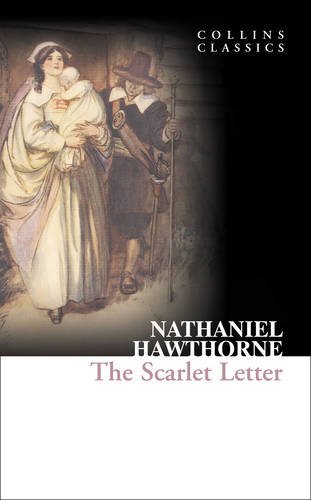
The Scarlet Letter by Nathaniel Hawthorne

The Scarlet Letter by Nathaniel Hawthorne
First published by Charles E. Brown in 1850 (this edition by Harper Press in 2010)

Description (from Goodreads)

'Ah, but let her cover the mark as she will, the pang of it will be always in her heart.' A tale of sin, punishment and atonement, The Scarlet Letter exposes the moral rigidity of a 17th-Century Puritan New England community when faced with the illegitimate child of a young mother. Regarded as the first real heroine of American fiction, it is Hester Prynne's strength of character that resonates with the reader when her harsh sentence is cast. It is in her refusal to reveal the identity of the father in the face of her accusers that Hawthorne champions his heroine and berates the weakness of Society for attacking the innocent.

My thoughts
The Scarlet Letter was a book I saw randomly in the bookshop, saw that it was on offer, remembered that it was on the 1001 Books To Read Before You Die list and so, I decided to buy it. I started reading it without reading any reviews of it first or checking the ratings on Goodreads, two facts that definitely played a huge part in my deciding to read it (and also, to try and finish it).

I really did have a problem when reading The Scarlet Letter. It's not that the story isn't interesting. It really is. If you think about it, the book is set in an era when women with children born out of wedlock were shunned by the community and was published at a time when people weren't very receptive of the idea, either (or so I suppose). So, the fact that the main character in this book is such a woman (who has borne a child out of wedlock) allows us to "see" how the person who is subjected to such treatment deals with the whole situation and can account for a very interesting tale.

However, (and that is a BIG however) the book is just unreadable. The language is far too complex, with difficult to comprehend sentences and very long paragraphs with not much going on in them. All of that made the book too difficult to understand at times, which resulted in me ignoring large parts of certain chapters (though I had read them, but failed miserably to comprehend them). And I think it was a pity not to enjoy a book for such a reason. But, really, the difficulty in reading this book took too much of the story away from me.

As for the story and the characters, I can't really say they were clear-cut characters. They were pretty difficult to figure out, as the author made them keep secrets even from the readers, not just from one another. The little child, Pearl, thoroughly creeped me out for the better part of the book and I really couldn't find myself caring for any of the characters in this book.

So as you might expect, this book is not going to be getting a good rating from me. But, from what I've seen on Goodreads, there have been a great number of people who have really enjoyed reading The Scarlet Letter and have managed to "get over" the whole language issue. So, if you like the sound of the story (just like I did), then do not hesitate to try it out for yourself. Even though I did not enjoy it in the end, I am glad that I at least gave this book a chance.

Rating: 2/10


Author:
Nathaniel Hawthorne was an American novelist and short story writer, who lived in the 19th century. He is considered to be a key figure in the development of 19th century American Literature. A large part of his writing centers around New England (such as The Scarlet Letter). Some of his other works include:


You can find out more about the author HERE.


Read for the: 100 Books In A Year Challenge 2011, Victorian Literature Challenge, 1001 Books To Read Before You Die (personal challenge)

Thursday, 8 September 2011

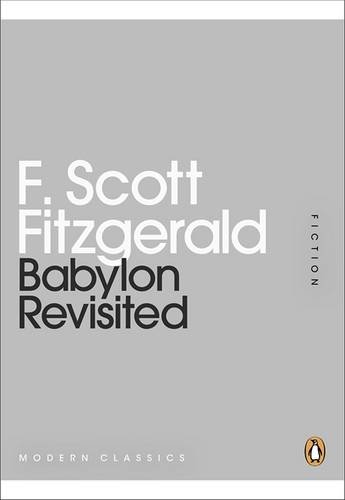
Babylon Revisited by F. Scott Fitzgerald

Babylon Revisited by F. Scott Fitzgerald
First published by Charles Scribner's Sons in 1960 (this edition by Penguin Classics in 2011)


Description (from Goodreads)
F Scott Fitzgerald's stories defined the 1920s 'Jazz Age' generation, with their glittering dreams and tarnished hopes. This book features three tales of a fragile recovery, a cut-glass bowl and a life lost. It portrays the idealism of youth and the ravages of success.


My thoughts
I am going to be completely honest here: this book is a bit of a cheat, but nonetheless, I am including it in my 100 Books In A Year Challenge, as it is a book and I did read it. But, because of the fact that it is so short (and because it features 3 short stories), I am making this a mini-review, as I can't say anything about it without spoiling it for anyone who wants to read it.


Having read The Great Gatsby a few months ago and really enjoyed F. Scott Fitzgerald's style of writing, I decided to try reading Babylon Revisited when I noticed my grandparents had a copy of it on their bookshelves. Plus, at the time, I really felt like reading something that would not take me too long to finish.


All three stories were unique. They were in no way connected and each dealt with a completely different kind of issue. My main problem was the fact that they just stopped, quite suddenly. I found that to be especially prominent in the first story (which was also the longest). I was reading it, got to a point where the chapter finished, turned the page expecting to carry on with the story and saw that the story had finished. So, it left me hanging a little.


Other than that, the writing was very good. But I did enjoy The Great Gatsby a lot more than Babylon Revisited. I'm looking forward to reading something else by F. Scott Fitzgerald. (I'll have to have a look through all our old books - I have no idea what might be hidden in there!)


Rating: N/A (I can't really rate it)


Author:
You can find out more about F. Scott Fitzgerald at the end of my review of The Great Gatsby.


Read for the: 100 Books In A Year Challenge 2011


Monday, 4 July 2011

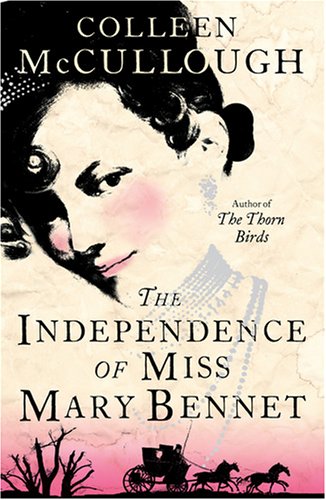
The Independence of Miss Mary Bennet by Colleen McCullough

The Independence of Miss Mary Bennet by Colleen McCullough
First published by HarperCollins in 2008 (this edition by HarperCollins in 2009)


Description (from Goodreads):
Twenty years after Pride and Prejudice closes, the Bennet sisters have another remarkable story to tell.

Mary Bennet, of the atrocious voice and staid bent of mind, has been weighed down with family obligations. Her sisters have made lives of their own: Jane is happily married, Elizabeth finds being a Darcy brings unwelcome social pre-eminence, Lydia's still entranced by soldiers, and Kitty's a star of London's fashionable salons. But Mary has had to wait for her moment to claim her liberty.

Once she is free, Mary resolves to publish a book about the plight of England's poor. Plunging from one pedicament to another, she embarks upon a mission of investigation that eventually leads her into mortal danger. But having tasted independence, Mary resolves to keep it - and she will let nobody, whether family, suitor or enemy, take it away.

Warm, witty, tragic and eminently satisfying, The Independence of Mary Bennet is a novel for every woman who has yearned to make her mark upon the world, from a master story teller. 


My thoughts:
The Independence of Miss Mary Bennet - as is obvious from the title - tells the story of the sister who is most reserved in the story of Pride and Prejudice. In this book, set 20 years after the events in P&P, we see a completely different story, where everything seems to be falling apart: Lydia has become a drunk and has been subjected to years of Wickham selling out her body for money; Lizzie is in a cold and distant marriage, as Fitz (that's Darcy) has reverted back to his cold and superior ways; Jane is tired out from having to endure one pregnancy after the other; Mary is stuck living with her mother in some corner of the country, where Darcy has hidden her away so as not to cause any embarrassment. On the other hand, Kitty seems to have made quite a good catch, by marrying a gentleman.


But then, Mrs Bennet dies, leaving Mary a free person. It is assumed that she will either stay with Jane or Lizzie (whose houses are a few miles apart), but Mary takes them all by surprise and decides to make her own way in the world, resolving to publish a book about the poor people of England. Somehow, though, she doesn't manage to get very far in her travels and lands into a bit of a predicament.


Though I really hate the cover of this book, it was the title that drew me to buy and read it. I really loved Pride and Prejudice and Mary was one of the most inconspicuous characters in it, so I was very interested to see what the author came up with to present as her story. At first, I absolutely hated the book. The only reason for that - and I know it's rather shallow - was the fact that Lizzie and Mr. Darcy (Fitz as he is known throughout the book) have not had a happy marriage, despite their lovely courtship in P&P. Talk about disappointing. But as the book progressed it became more interesting. It was obvious that the author made all the circumstances of the other Bennet sisters off-putting, so as for Mary to have an argument against marriage. Mary sets off on her grand journey, despite all warnings against it, and manages to end up having quite an adventure.


Mary's character is portrayed in a lovely way. It shows that she's not the same person she was 20 years ago; that she has grown to realise a bit more about the world. She is a wonderful, compassionate woman, who revels at being free (after nearly 20 years of being confined to care for her mother), and is smart and knowledgeable to boot.


I liked the fact that new characters entered the scene. It wasn't all about the characters we have already met and loved in Pride and Prejudice. My favourite would definitely have to be Charlie, Lizzie and Fitz's son.


Though I did enjoy this book, I can't say that it was one that I just have to keep on my shelves forever. Nearing the end, some of the things happening seemed to be dealt with in a very quick manner, to the point of me actually thinking that it was a rather quick change of heart.


Rating: 6/10


Author:
Colleen McCullough is an Australian author. She intended to study medicine at university, but a severe reaction of her skin to surgical soap led her to abandon her dream of becoming a medical doctor. Instead, she switched to neuroscience and has worked in many hospitals in Australia and England, before getting a teaching job at the Yale Medical School. She currently lives in Sydney.
Her other books include:


You can find out more about Colleen McCullough and her books HERE.

Read for the: 100 Books In A Year Challenge 2011

Thursday, 26 May 2011

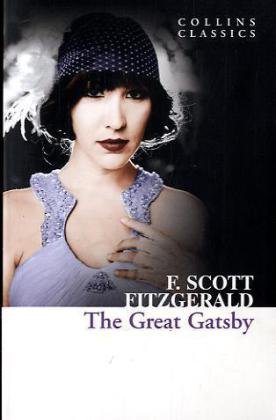
The Great Gatsby

The Great Gatsby by F. Scott Fitzgerald
First published by ?? in 1925 (this edition by Harper Press in 2010)


Description: (from Goodreads)
After the war, mysterious Jay Gatsby, a self-made millionaire pursues wealth,riches and the lady he lost to another man with stoic determination. When Gatsby finally does reunite with Daisy Buchanan, tragic events are sent in motion. Told through the eyes of his detached and omnipresent neighbour and friend, Nick Carraway, Fitzgerald's succinct and powerful prose hints at the destruction and tragedy that awaits.

My thoughts:
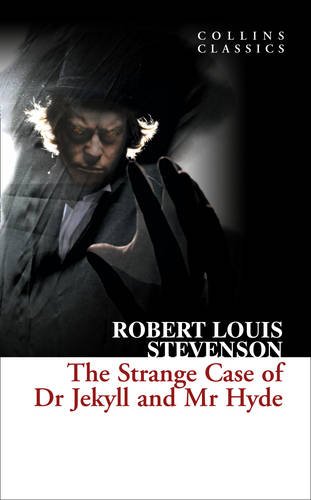
I don't think I can remember the first time I heard about this book. But I was in a bookshop in Athens one day (about half a year ago) and I was trying to find some books to buy, when I found a series of Collins Classics book which only cost 4 euros each. Let me tell you, that's cheap... So I actually ended up buying 4 of them (The Strange Case of Dr Jekyll and Mr Hyde, The Scarlett Letter, Moll Flanders and this one). Anyway, I only just got round to reading this one.

When I decided to read this book, I was rather glad of the fact that it's rather short. The book was very thin. Until I opened the book and saw the size of the font. It's tiny! I don't think I've ever seen such a tiny font in my life. No, scratch that, I have (in The Lord of the Rings edition that we have at home). Regardless, I found that The Great Gatsby is a very easy story to get into.

As suggested by the title, the book focuses on the life of a man called Jay Gatsby. The story is not told from his point of view, but rather from the eyes of his neighbour and 'friend', Nick Carraway. During the course of the story, many things happen, despite the small number of pages. At first, we meet Gatsby through the experiences of others, the stories people have heard about him. Then comes the point where the narrator, Nick, actually meets him in person and when the 'action' starts happening.

Nick is a very likeable character, who seems to me as if he's a little lost at times while everything is happening around him. Jay Gatsby is a rather distant character. He seems to be elsewhere - in a world of his own - during some of his encounters with Nick, but seems to come alive later on in the book. Daisy didn't strike me as a very strong character and I have to admit I didn't like her husband, Tom, probably because he was a cheater. A character I liked was Jordan Baker. She wasn't one of the main characters, but I liked her attitude and her carefree personality.

All in all, The Great Gatsby is a book worth reading. It's short and very well developed, with wonderful prose. I haven't read anything else by F. Scott Fitzgerald, but I am looking forward to picking up another one of his books.

Rating: 8/10

Author:
Francis Scott Key Fitzgerald was born in Minnesota in 1896 and died in 1940. He was a writer of novels and short stories. During the course of his rather short life, he wrote 4 novels, left a fifth one unfinished and published a number of short stories. He is regarded as one of the greatest 20th century writers. Fitzgerald was of the self-styled "Lost Generation," Americans born in the 1890s who came of age during World War I.
His other works include:


Read for the: 100 Books In A Year 2011 Challenge


Sunday, 17 April 2011

The Strange Case of Dr Jekyll and Mr Hyde

I had actually never read this book, when I noticed this book in a bookshop for only 4 euros. I only just got round to reading it though, so here is my review.


The Strange Case of Dr Jekyll and Mr Hyde by R. L. Stevenson
First published by Longmans, Green & Co. in 1886 (this edition by HarperPress in 2010)


Description: (from back cover)
'All human beings, as we meet them, are commingled out of good and evil.'
After taking an elixir created in his laboratory, mild mannered Dr Jekyll is transformed into the cruel and despicable Mr Hyde. Although seemingly harmless at first, things soon descend into chaos and Jekyll quickly realises there is only one way to stop Hyde. Stevenson's quintessential novella of the Victorian era epitomizes the conflict between psychology, science and religious morality, but is fundamentally a triumphant study of the duality of human nature.


Opinions:
I kept hearing about this story for years and years, but only vaguely knew what it was about. I can honestly say that having now read the book, it wasn't really what I was expecting.


We all know the basic plot. We have one man, Dr Jekyll, who drinks some sort of potion he makes and is promptly transformed into Mr Hyde. The difference between these two men is not limited to their appearance, but goes as far as their actual character. Dr Jekyll is described as a mild mannered man, whereas Mr Hyde is said to be evil personified (or maybe that's too harsh). He seems to repel each and every character in the book.


I don't know why, but I remember that, at some point, I used to think that Dr Jekyll was the evil one and Mr Hyde the good one. I was a little embarrassed when someone pointed out that it was the opposite. Though I think that my assumption that Dr Jekyll was the evil one came from the fact that he is a doctor (just like Frankenstein, who created his monster).


I don't want to spoil the book, so I can't really get into many details. The book is less than 100 pages long, so I have to be careful not to give any information away that could potentially ruin the book for someone who has not yet read it. The book is told in the third person, through the eyes of the people in the immediate circle of Dr Jekyll or through letters. This actually gives it an air of mystery, as everyone has a view of what is going on, but have no means of knowing why each thing is happening.


The story actually want to show the duality of human nature. Dr Jekyll stands for the good part in a person, whereas Mr Hyde stands for the evil part of the same person. Thus, Hyde really acts like a mask, behind which Jekyll is free to do anything he wants. One thing that stood out (to me) was the fact that Dr Jekyll is described as a tall and healthy man, with a pleasant face, but Mr Hyde is presented as a man of short stature and looks that make people want to look away from him. I always imagined Hyde as a tall, muscular sort of fellow, who was probably a bit of a bully because of his size. So I was quite surprised to see that was not the case.


All in all, it was a good book, if a little short. I think it could have done with a little more development and it wouldn't have been at all tiring. I liked the setting of the book and the message it was trying to get across. A book that people should read. I, for one, think I should have read this book years ago. It's not really scary. It's more mysterious, really. So, just go read it if you haven't!


Rating: 7/10


Author:
Robert Louis Stevenson was a Scottish poet and novelist and is regarded as a leading representative of Neo-romanticism in English literature. He was greatly admired by many well-known authors, such as Jorge Luis Borges, Rudyard Kipling, Vladimir Nabokov and Ernest Hemingway. He published his first book at the age of 33 and died of an apparent cerebral hemorrhage at the age of 44. During his relatively few years of writing, he managed to write an impressive number of novels, short stories, poetry and travel writing, a list of which you can find HERE.
His most well-known books include Treasure Island, Kidnapped and The Strange Case of Dr Jekyll and Mr Hyde.


Counts as Book #28 in my 100 Books In A Year Challenge and as Book #14 in my British Books Challenge 2011!
Also counts toward the Victorian Literature Challenge.


Related Posts Plugin for WordPress, Blogger...