Showing posts with label 1001 books to read before you die. Show all posts

Wednesday, 7 December 2011

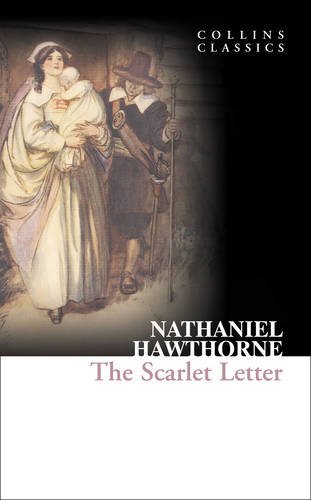
The Scarlet Letter by Nathaniel Hawthorne

The Scarlet Letter by Nathaniel Hawthorne
First published by Charles E. Brown in 1850 (this edition by Harper Press in 2010)

Description (from Goodreads)

'Ah, but let her cover the mark as she will, the pang of it will be always in her heart.' A tale of sin, punishment and atonement, The Scarlet Letter exposes the moral rigidity of a 17th-Century Puritan New England community when faced with the illegitimate child of a young mother. Regarded as the first real heroine of American fiction, it is Hester Prynne's strength of character that resonates with the reader when her harsh sentence is cast. It is in her refusal to reveal the identity of the father in the face of her accusers that Hawthorne champions his heroine and berates the weakness of Society for attacking the innocent.

My thoughts
The Scarlet Letter was a book I saw randomly in the bookshop, saw that it was on offer, remembered that it was on the 1001 Books To Read Before You Die list and so, I decided to buy it. I started reading it without reading any reviews of it first or checking the ratings on Goodreads, two facts that definitely played a huge part in my deciding to read it (and also, to try and finish it).

I really did have a problem when reading The Scarlet Letter. It's not that the story isn't interesting. It really is. If you think about it, the book is set in an era when women with children born out of wedlock were shunned by the community and was published at a time when people weren't very receptive of the idea, either (or so I suppose). So, the fact that the main character in this book is such a woman (who has borne a child out of wedlock) allows us to "see" how the person who is subjected to such treatment deals with the whole situation and can account for a very interesting tale.

However, (and that is a BIG however) the book is just unreadable. The language is far too complex, with difficult to comprehend sentences and very long paragraphs with not much going on in them. All of that made the book too difficult to understand at times, which resulted in me ignoring large parts of certain chapters (though I had read them, but failed miserably to comprehend them). And I think it was a pity not to enjoy a book for such a reason. But, really, the difficulty in reading this book took too much of the story away from me.

As for the story and the characters, I can't really say they were clear-cut characters. They were pretty difficult to figure out, as the author made them keep secrets even from the readers, not just from one another. The little child, Pearl, thoroughly creeped me out for the better part of the book and I really couldn't find myself caring for any of the characters in this book.

So as you might expect, this book is not going to be getting a good rating from me. But, from what I've seen on Goodreads, there have been a great number of people who have really enjoyed reading The Scarlet Letter and have managed to "get over" the whole language issue. So, if you like the sound of the story (just like I did), then do not hesitate to try it out for yourself. Even though I did not enjoy it in the end, I am glad that I at least gave this book a chance.

Rating: 2/10


Author:
Nathaniel Hawthorne was an American novelist and short story writer, who lived in the 19th century. He is considered to be a key figure in the development of 19th century American Literature. A large part of his writing centers around New England (such as The Scarlet Letter). Some of his other works include:


You can find out more about the author HERE.


Read for the: 100 Books In A Year Challenge 2011, Victorian Literature Challenge, 1001 Books To Read Before You Die (personal challenge)

Monday, 26 September 2011

Uncle Petros and Goldbach's Conjecture by Apostolos Doxiadis

Uncle Petros and Goldbach's Conjecture by Apostolos Doxiadis
First published in Greek by Kastaniotis in 1992 titled ''Ο θείος Πέτρος και η εικασία του Γκόλντμπαχ'' (this edition by Faber & Faber in 2000)


Description (from Goodreads)
In the tradition of Fermat's Last Theorem and Einstein's Dreams, a novel about mathematical obsession.

Petros Papachristos devotes the early part of his life trying to prove one of the greatest mathematical challenges of all time: Goldbach's Conjecture, the deceptively simple claim that every even number greater than two is the sum of two primes. Against a tableau of famous historical figures-among them G.H. Hardy, the self-taught Indian genius Srinivasa Ramanujan, and a young Kurt Godel-Petros works furiously to prove the notoriously difficult conjecture. Decades later, his ambitious young nephew drives the defeated mathematician back into the hunt to prove Goldbach's Conjecture. . . but at the cost of the old man's sanity, and perhaps even his life.


My thoughts
I do realise that most of you probably won't be able to read the Greek I have put up there, but I thought I might as well show off a little bit and put a teensy weensy bit of Greek on my blog!


Just because I am extremely smart, I decided to read a book, that was first published in Greek, in English. If it were the other way around and you were telling me to read a Greek translation of an English book, I wouldn't do it easily or happily, because the majority of books that I have read in Greek have either been very bad translations of foreign books or boring Greek ones. (Do not get me started on some of the things Greek writers choose to write about. Plus, most times I find their language to be a little too show-off-y.)


Uncle Petros and Goldbach's Conjecture is one of those books that I have been hearing about for years and years. Though I am not a big fan of reading fiction in Greek, I do not mind reading books that deal with philosophy or mathematical logic in Greek. I think that is probably because of the fact that I went to a Greek school, so everything I know about maths and logic (and all that jazz), I know in the Greek way; I am more familiar with the terms, which means that it helps me to better understand what is going on. The thing is that we never had a copy of this book at home (that I know of, at least). I did know my Grandpa had one when I went to England this year and I promised myself I would read it this summer.


Before reading this book, I had only vaguely heard of Goldbach's Conjecture, but had never really bothered to find out what exactly this Conjecture was all about. Now, I consider myself a little more educated with the matter. The story focuses on the narrator's Uncle Petros, a recluse of sorts, who is considered to be a bit of a weirdo even by his own brothers, because he never showed any interest in anything except for his ''beloved" mathematics. The real story behind Uncle Petros' withdrawal from society was the fact that he had  become obsessed with proving Goldbach's Conjecture.


The book consists of three chapters (yes, three), each one surrounding a different time in the narrator's and Uncle Petros' lives. We learn of Uncle Petros' story through the narrator, who is an aspiring mathematician and turns to his Uncle Petros for advice and guidance. His story is truly intriguing and it shows how something (even in the form of a short mathematical equation) can take over your whole life. It is also rather sad at times, because you can't help but feel sorry either for the narrator or for Uncle Petros himself, depending on which part you are reading.


Uncle Petros and Goldbach's Conjecture is not a book for everyone. I am not trying to sound snobbish, but I know for fact that not many people like reading books about maths and mathematical logic. And it's completely understandable. Which is why there is going to be no urging to read this book. It is very well written and very interesting, but because of the fact that is it very mathematically oriented, it's not for everyone. But, if you are interested in reading a book about maths, this is an excellent book to read.


Rating: 8/10 


Author:
Apostolos Doxiadis was born in Brisbane, Australia, but grew up in Athens, Greece. Although interested in fiction and the arts from his youngest years, a sudden and totally unexpected love affair with mathematics led him to New York's Columbia University at the age of fifteen. He did graduate work in Applied Mathematics at the École Pratique des Hautes Études in Paris, working on mathematical models for the nervous system. He has also directed and written theatre plays, as well as films.


(This is one book I've been meaning to read for quite some time, but it's not very cheap so I haven't got round to buying it yet.)


You can find out more about Apostolos Doxiadis from his official website.


Read for the: 100 Books In A Year Challenge 2011

Monday, 12 September 2011

Candide by Voltaire

Candide (or Optimism) by Voltaire
First published in 1759 (this edition by Penguin Classics in 1979)


Descriptions (from Goodreads)
A flamboyant and controversial personality of enormous wit and intelligence, Voltaire is one of the most intriguing figures of the eighteenth century Enlightenment. His masterpiece is Candide, a brilliant satire on the theory that 'the world is the best of all possible worlds.' The book traces the picaresque adventures of the guileless Candide, who is forced into the army, flogged, shipwrecked, betrayed, robbed, separated from his beloved Cunegonde, tortured by the Inquisition, etc., all without losing his resilience and will to live.


My thoughts
Candide is another book I can't find myself to rate. I will be honest here and say that the only reason I decided to read this one was so that I can say that sometime in my life I read Voltaire! But when I got round to reading the first couple of pages, I realised that the names of some of the characters reminded me of something; that I had heard of them before. (I still can't remember where...!)


Candide is essentially a satire; a story full of irony, sarcasm, exaggeration and parody, that is meant to sound funny, but it usually has an underlying message - to offer constructive criticism using wit as a weapon (thank you Wikipedia). That is exactly what Candide is and I can understand why the book is also known as Optimism. Candide is the main character and he seems to be as backbone-less as can be. He just seems to accept everything that he is told, regardless of who the person telling him is. Essentially, he does not seem to have any free will of his own, or any particular skills; he goes through life by listening to others. And he is very shallow.


So, the other characters are essential to the progression of the story, as Candide on his own wouldn't have done much. As for the story itself, before reading it, you cannot imagine how many bad things happen to the characters in this book! Abductions, killings, rape, theft, just to name a few. But even still, Candide does not let all the bad events make him less happy about life. He lives by the motto that 'everything bad happens for a reason'. Which I suppose is a very good motto to live by, but not when absolutely nothing good ever happens to you.


The philosophy that this book is based on is brilliantly presented by Voltaire. It is rather obvious that he thinks the philosophy is ridiculous, and throughout the book, he shows us just that. But even though it is rather philosophical, it doesn't get tiring when you're reading it, which I find great when I'm reading anything about philosophy.


Rating: N/A (Again, I don't feel like I can rate it - I mean, it is Voltaire)


Author:
François-Marie Arouet, better known by his pen name Voltaire, was a French Enlightenment writer, historian and philosopher famous for his wit and for his advocacy of civil liberties, including freedom of religion and free trade. Voltaire was a prolific writer, producing works in almost every literary form including plays, poetry, novels, essays, and historical and scientific works. He wrote more than 20,000 letters and more than 2,000 books and pamphlets. He was an outspoken supporter of social reform, despite strict censorship laws and harsh penalties for those who broke them. As a satirical polemicist, he frequently made use of his works to criticize intolerance, religious dogma and the French institutions of his day. (from Wikipedia)


Read for the: 100 Books In A Year Challenge 2011

Monday, 20 June 2011

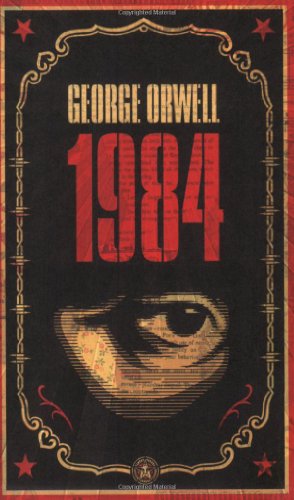
1984 by George Orwell

1984 (or Nighteen Eighty-Four) by George Orwell
First published in 1945 (this edition published by Penguin Books in 2008)


Description (from Goodreads):
'It was a bright cold day in april, and the clocks were striking thirteen.'

Winston Smith works for the Ministry of truth in London, chief city of Airstrip One. Big Brother stares out from every poster, the Thought Police uncover every act of betrayal.
When Winston finds love with Julia, he discovers that life does not have to be dull and deadening, and awakens to new possibilities. Despite the police helicopters that hover and circle overhead, Winston and Julia begin to question the Party; they are drawn towards conspiracy. Yet Big Brother will not tolerate dissent.

Ninteen Eighty-Four is George Orwell's terrifying vision of a totalitarian future in which everything and everyone is slave to a tyrannical regime.


My thoughts:
I have been wanting to read a book by George Orwell for a few years but decided to read one now mainly because of the fact that I am participating in the Author A-Z Challenge this month and realised I had not read any books by authors whose surname begins in O. I was definitely planning on reading one of his books this year, but the time came sooner rather than later. And, as I am obviously not the smartest crayon in the box, I started with the long and more difficult of his two books that I own, 1984 (the other being the infinitely more manageable, Animal Farm).


Regardless, I really enjoyed reading this book. It is very, very political, and, even though I am not a great one for politics (they bore me), I found myself wanting to read more and more of it, to find out what happens. The main character in this book is Winston Smith, a man in his late thirties, who works for the Ministry of Truth (also known as Mini-true). He goes to work everyday, makes all the changes to documents he is told to make (by a weird device on his desk which seems to sprout out papers) and then goes back to his house, and is constantly under the surveillance of  a telescreen. The story takes place in London, which is now the biggest city on Airstrip One and a part of Oceania. (Yes, I did say Oceania.) There, he begins a little rebellion of his own, as he purchases a diary and a pen without anyone knowing (from a prole - proletarian - store) and sits in the only place in his apartment where the telescreen cannot see him.


At some point, he meets Julia. At first, he hates her, because she embodies all that he finds wrong with the system. But, gradually, things start to come to the surface, that he ends up falling in love with her. It turns out that Julia is a lot more complex than he previously thought. I have to say, while reading about her, I did experience a certain admiration towards her character, as to how she managed to live what was essentially a double life.


The most interesting part of the novel is, by far, the third one. I am not going to tell you what it's about, but it gives you a certain understanding of the order of things. People are not who they seem to be, while certain places are used to 'cure' people of ideas in any way possible. In this part, we get to find out how the system really works and why it works in such a way and I found it very interesting.


Another part of the book I really enjoyed reading (though I don't usually) was the appendix, which explained the principles of Newspeak. It was so interesting to find out exactly how the author came up with the language, how he justified all the changes. I finished reading the book at nearly 3am, but kept on reading about the principles, because once I started, I couldn't stop!


In one sentence? George Orwell is one hell of an author! Lovely prose indeed. Will definitely be reading Animal Farm soon!


Rating: 8/10 (only because I found it difficult finishing some chapters, as they were a little too long)


Author:
Eric Arthur Blair, better known with his pen name George Orwell, was an English author and journalist. According to Wikipedia, his work is marked by keen intelligence and wit, a profound awareness of social injustice, an intense opposition to totalitarianism, a passion for clarity in language, and a belief in democratic socialism. He wrote fiction, poetry, polemical journalism and literary criticism. He is best known for the two books mentioned in this review, the dystopian 1984 and the satirical novella Animal FarmHis other novels include Keep The Aspidistra Flying and Coming Up For Air. He died in 1950, at the age of 46.


You can find out more about George Orwell HERE.


Read for the: 100 Books In A Year Challenge 2011, British Books Challenge 2011, Dystopia Challenge

Thursday, 26 May 2011

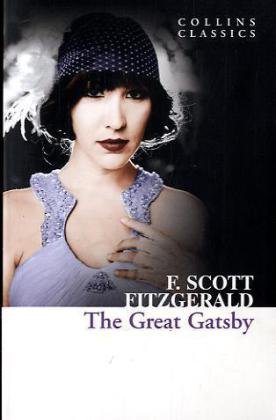
The Great Gatsby

The Great Gatsby by F. Scott Fitzgerald
First published by ?? in 1925 (this edition by Harper Press in 2010)


Description: (from Goodreads)
After the war, mysterious Jay Gatsby, a self-made millionaire pursues wealth,riches and the lady he lost to another man with stoic determination. When Gatsby finally does reunite with Daisy Buchanan, tragic events are sent in motion. Told through the eyes of his detached and omnipresent neighbour and friend, Nick Carraway, Fitzgerald's succinct and powerful prose hints at the destruction and tragedy that awaits.

My thoughts:
I don't think I can remember the first time I heard about this book. But I was in a bookshop in Athens one day (about half a year ago) and I was trying to find some books to buy, when I found a series of Collins Classics book which only cost 4 euros each. Let me tell you, that's cheap... So I actually ended up buying 4 of them (The Strange Case of Dr Jekyll and Mr Hyde, The Scarlett Letter, Moll Flanders and this one). Anyway, I only just got round to reading this one.

When I decided to read this book, I was rather glad of the fact that it's rather short. The book was very thin. Until I opened the book and saw the size of the font. It's tiny! I don't think I've ever seen such a tiny font in my life. No, scratch that, I have (in The Lord of the Rings edition that we have at home). Regardless, I found that The Great Gatsby is a very easy story to get into.

As suggested by the title, the book focuses on the life of a man called Jay Gatsby. The story is not told from his point of view, but rather from the eyes of his neighbour and 'friend', Nick Carraway. During the course of the story, many things happen, despite the small number of pages. At first, we meet Gatsby through the experiences of others, the stories people have heard about him. Then comes the point where the narrator, Nick, actually meets him in person and when the 'action' starts happening.

Nick is a very likeable character, who seems to me as if he's a little lost at times while everything is happening around him. Jay Gatsby is a rather distant character. He seems to be elsewhere - in a world of his own - during some of his encounters with Nick, but seems to come alive later on in the book. Daisy didn't strike me as a very strong character and I have to admit I didn't like her husband, Tom, probably because he was a cheater. A character I liked was Jordan Baker. She wasn't one of the main characters, but I liked her attitude and her carefree personality.

All in all, The Great Gatsby is a book worth reading. It's short and very well developed, with wonderful prose. I haven't read anything else by F. Scott Fitzgerald, but I am looking forward to picking up another one of his books.

Rating: 8/10

Author:
Francis Scott Key Fitzgerald was born in Minnesota in 1896 and died in 1940. He was a writer of novels and short stories. During the course of his rather short life, he wrote 4 novels, left a fifth one unfinished and published a number of short stories. He is regarded as one of the greatest 20th century writers. Fitzgerald was of the self-styled "Lost Generation," Americans born in the 1890s who came of age during World War I.
His other works include:


Read for the: 100 Books In A Year 2011 Challenge


Sunday, 17 April 2011

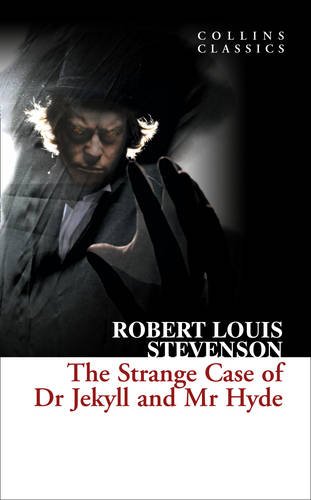
The Strange Case of Dr Jekyll and Mr Hyde

I had actually never read this book, when I noticed this book in a bookshop for only 4 euros. I only just got round to reading it though, so here is my review.


The Strange Case of Dr Jekyll and Mr Hyde by R. L. Stevenson
First published by Longmans, Green & Co. in 1886 (this edition by HarperPress in 2010)


Description: (from back cover)
'All human beings, as we meet them, are commingled out of good and evil.'
After taking an elixir created in his laboratory, mild mannered Dr Jekyll is transformed into the cruel and despicable Mr Hyde. Although seemingly harmless at first, things soon descend into chaos and Jekyll quickly realises there is only one way to stop Hyde. Stevenson's quintessential novella of the Victorian era epitomizes the conflict between psychology, science and religious morality, but is fundamentally a triumphant study of the duality of human nature.


Opinions:
I kept hearing about this story for years and years, but only vaguely knew what it was about. I can honestly say that having now read the book, it wasn't really what I was expecting.


We all know the basic plot. We have one man, Dr Jekyll, who drinks some sort of potion he makes and is promptly transformed into Mr Hyde. The difference between these two men is not limited to their appearance, but goes as far as their actual character. Dr Jekyll is described as a mild mannered man, whereas Mr Hyde is said to be evil personified (or maybe that's too harsh). He seems to repel each and every character in the book.


I don't know why, but I remember that, at some point, I used to think that Dr Jekyll was the evil one and Mr Hyde the good one. I was a little embarrassed when someone pointed out that it was the opposite. Though I think that my assumption that Dr Jekyll was the evil one came from the fact that he is a doctor (just like Frankenstein, who created his monster).


I don't want to spoil the book, so I can't really get into many details. The book is less than 100 pages long, so I have to be careful not to give any information away that could potentially ruin the book for someone who has not yet read it. The book is told in the third person, through the eyes of the people in the immediate circle of Dr Jekyll or through letters. This actually gives it an air of mystery, as everyone has a view of what is going on, but have no means of knowing why each thing is happening.


The story actually want to show the duality of human nature. Dr Jekyll stands for the good part in a person, whereas Mr Hyde stands for the evil part of the same person. Thus, Hyde really acts like a mask, behind which Jekyll is free to do anything he wants. One thing that stood out (to me) was the fact that Dr Jekyll is described as a tall and healthy man, with a pleasant face, but Mr Hyde is presented as a man of short stature and looks that make people want to look away from him. I always imagined Hyde as a tall, muscular sort of fellow, who was probably a bit of a bully because of his size. So I was quite surprised to see that was not the case.


All in all, it was a good book, if a little short. I think it could have done with a little more development and it wouldn't have been at all tiring. I liked the setting of the book and the message it was trying to get across. A book that people should read. I, for one, think I should have read this book years ago. It's not really scary. It's more mysterious, really. So, just go read it if you haven't!


Rating: 7/10


Author:
Robert Louis Stevenson was a Scottish poet and novelist and is regarded as a leading representative of Neo-romanticism in English literature. He was greatly admired by many well-known authors, such as Jorge Luis Borges, Rudyard Kipling, Vladimir Nabokov and Ernest Hemingway. He published his first book at the age of 33 and died of an apparent cerebral hemorrhage at the age of 44. During his relatively few years of writing, he managed to write an impressive number of novels, short stories, poetry and travel writing, a list of which you can find HERE.
His most well-known books include Treasure Island, Kidnapped and The Strange Case of Dr Jekyll and Mr Hyde.


Counts as Book #28 in my 100 Books In A Year Challenge and as Book #14 in my British Books Challenge 2011!
Also counts toward the Victorian Literature Challenge.


Thursday, 10 February 2011

The Unbearable Lightness of Being

I hadn't planned on buying this book. It just happened. I was in the bookshop one day, looking through all the titles and suddenly noticed the book in question. I had heard of it, but did not know exactly what it was about. I took it from the shelf and was pleasantly surprised by the cover! So, after reading the description on the back cover, decided to buy it. Here I am now, reviewing it.


The Unbearable Lightness of Being by Milan Kundera
First published: by Harper & Row in 1984 (This edition by Faber & Faber in 2000)


Description: (from Amazon.co.uk)
In this novel - a story of irreconcilable loves and infidelities - Milan Kundera addresses himself to the nature of twentieth-century 'Being' In a world in which lives are shaped by irrevocable choices and by fortuitous events, a world in which everything occurs but once, existence seems to lose its substance, its weight. We feel, says the novelist, 'the unbearable lightness of being' - not only as the consequence of our private acts but also in the public sphere, and the two inevitably intertwine. Juxtaposing Prague, Geneva, Thailand and the United States, this masterly novel encompasses the extremes of comedy and tragedy, and embraces, it seems, all aspects of human existence. It offers a wide range of brilliant and amusing philosophical speculations and it descants on a variety of styles.


Opinions: 
I found The Unbearable Lightness of Being to be one of the most 'different' books I have ever read. And that's actually saying a lot. I have read books ranging from chick-lit to children's books and from maths to philosophy, finding them all enjoyable in a very different way. This book was as enjoyable as it was sad. Throughout the book, you come to see all the different decisions that each character has to take and the reasons they had for making that decision. You actually get to experience their 'Beings' through their own eyes.

The book is split up into 7 parts and each part consists of quite a few short chapters. The whole book is only 300 pages long, but it took me ages to finish. I found that it was one of those books that you have to read slowly in order not to miss anything. Even though it took me ages to read, it wasn't at all tiring. I just wanted to keep on reading and reading until I reached the end, something I - of course - could not do, due to my other responsibilities. But if I could've, I would've.

It tells the stories of three people (or maybe four) and a dog, all interconnected, including the decisions each one of them makes and which influence both other characters (in some cases). It is set in the time when the Czech Republic was under Russian occupation, as well as the years preceding the occupation, but not necessarily having Prague as a backdrop for each part of the story.

All in all I enjoyed the book immensely and think that it is classified as ''one of those books that you have to read at some point in your life''. Highly recommended. Even though I found the main character to be a bit of an ''idiot'', for reasons you will understand when you read it yourself. And for all those reasons:

Rating: 9/10 (I don't know if I will ever give a book a perfect 10... Well, you never know! But probably not... I'm not too comfortable giving out absolutely perfect scores on books...)


Author: Milan Kundera is a Czech author who has lived in exile in France since 1975, thus leading to him having written books in both languages. He was a reformist, committed to reforming Czech Communism, which led initially to a complete ban on the circulation of his works in Czechoslovakia and then, a stripping of his Czechoslovak citizenship in 1979. His most notable works include ''The Joke'' and ''The Book of Laughter and Forgetting'', both of which were published before ''The Unbearable Lightness of Being'' and are quite political (compared to his later works). 


Some of his other books include:
''Life is Elsewhere''
''Immortality''
''Slowness'' and
''Ignorance'' (his latest novel, published in 2000).
He has also written a series of short stories, which are included in the collection ''Laughable Loves''.
Here are some extra pages, for those who want to find out more!
Milan Kundera on Wikipedia

Counts as Book #7 in my 100 Books In A Year Challenge!
Related Posts Plugin for WordPress, Blogger...