Showing posts with label historical. Show all posts

Saturday, 8 October 2011

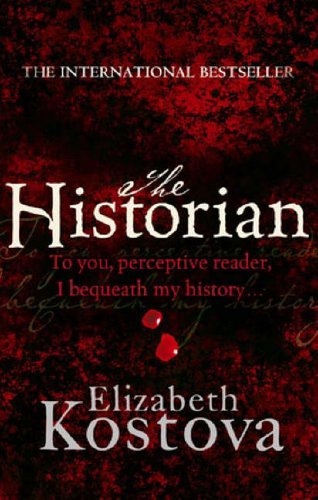
The Historian by Elizabeth Kostova

The Historian by Elizabeth Kostova
First published by Little, Brown and Company in 2005 (this edition by Sphere in 2010)

Description (from Goodreads)
Late one night, exploring her father's library, a young woman finds an ancient book and a cache of yellowing letters addressed ominously to 'My dear and unfortunate successor'. Her discovery plunges her into a world she never dreamed of - a labyrinth where the secrets of her father's past and her mother's mysterious fate connect to an evil hidden in the depths of history. 
In those few quiet moments, she unwittingly assumes a quest she will discover is her birthright - a hunt for the truth about Vlad the Impaler, the medieval ruler whose barbarous reign formed the basis of the Dracula myth. Deciphering obscure signs and hidden texts, reading codes worked into the fabric of medieval monastic traditions, and evading terrifying adversaries, one woman comes ever closer to the secret of her own past and a confrontation with the very definition of evil. 
Elizabeth Kostova's debut novel is an adventure of monumental proportions - a captivating tale that blends fact and fantasy, history and the present with an assurance that is almost unbearably suspenseful - and utterly unforgettable.

My thoughts
Before deciding to finally read this book, The Historian had been sitting on my bookshelves for a little longer than it should have. I did have a rather good excuse for that; its size. The Historian is over 700 pages long and it has tiny (and I do mean tiny) print. So, when it came round to me choosing the next book I wanted to read, I always ended up skipping it.

I am going to be completely honest here by saying that, though the book was great and I really enjoyed reading it, I felt like it could have been a little shorter. There were parts of it that just seemed to go on and on without really adding that much more new information to the story or helping much in the character building. But, despite that "slight" problem, The Historian really is an excellent book. It has a great narrator, great characters, lots of historical facts (if you are into that kind of stuff) and some weird things going on. What is weird about this book is that I am pretty sure the daughter (a young girl and the narrator of our story) is - as far as I noticed - never actually named. And I just realised this now, when I sat down to write up the review.

The story itself focuses on the legend of Vlad Dracula. Vlad Dracula is actually a person who existed historically, and who was evil and a little perverted. He ruled the region of Wallachia (in what is now part of Romania) and is also known by his other name, Vlad the Impaler, because of the fact that he used to impale his enemies on great poles (it was his favourite method of execution). The book contains a large number of facts about the mythology surrounding Vlad Dracula, particularly the mythology that also surrounds the inspiration of Bram Stocker's classic book, Dracula.

The story progresses through various methods. The main part of the book is about Paul and Helen's (who are closely related to the narrator) journey to find out the truth about some weird and unexplained events that seem to bring lots of people from rather different backgrounds together. Everything starts off when our narrator is in her teens and finds an ancient book on her father's bookshelves. She then proceeds to ask him about it and he slowly starts telling her a story, which began even before she was born. Later on in the book,  the author used other meant to keep on telling the story of the past (other than the father - Paul - 's storytelling), with just a few paragraphs on what is happening in the present time. (It might sound confusing, but it's not, really)

What I found to be a bit of a problem with this book was the fact that too big a part of it seemed to take part in the past. The vast majority of the book was taken over by the father's storytelling (as well as by the other devices the author uses to bring the past into the present), with only a limited number of pages left over for the narration of what is happening in the present. Sometimes, those "past" parts seemed to go on for too long (without much of a "present" break) and I was a little put out by the fact that we didn't get to focus on the actual narrator as much. She was mainly used as a device to introduce the "past" and didn't seem to have as much of an active role as I would have liked. More specifically, her interactions with Bailey were so refreshing and lovely, that I was a little sad that there weren't more of them in the story.

All in all, though it is a rather hefty book, The Historian is a worthwhile read. It is enjoyable and very informative (without becoming too heavy on information). Elizabeth Kostova has a wonderful way of writing and it is obvious that she has spent a large amount of time researching historical information to write this book. I will definitely be looking out for more of her books in the future.

Rating: 8/10


Author:
Elizabeth Kostova is an American author. She holds a degree from Yale University, as well as an MFA from the University of Michigan. The Historian was her first novel and was published in 2005. She has since published a second book, called The Swan Thieves.

You can find out more about Elizabeth Kostova and her books from her official website.

Read for the: 100 Books In A Year Challenge 2011

Saturday, 17 September 2011

The Reader by Bernhard Schlink

The Reader by Bernhard Schlink
First published (in the UK) by Weidenfeld and Nicholson in 1997 (this edition by Phoenix in 2008) - First published in German in 1995 as ''Der Vorleser''


Description (from the back cover)
For 15-year-old Michael, a chance meeting with an older woman leads to far more than he ever imagined. Before long they embark on a passionate, clandestine love affair which leaves Michael both euphoric and confused. For Hanna is not all she seems.


Years later, as a student observing a trial in Germany, Michael is shocked to find Hanna in the dock. The woman he loved is a war criminal. Much about her behaviour during the trial does not make sense. Hanna must answer for a horrible crime, but she is desperately concealing an even deeper secret.


My thoughts
As most (if not all) of you will know, The Reader was made into a film in 2008, starring Kate Winslet and Ralph Fiennes, which was hugely successful and which resulted in a Oscar for Kate Winslet. The film is really well made and the performances from Winslet, Fiennes and David Kross (who plays the young Michael) are exceptional.

So, in this case, I did things the other way around; I watched the film before I read the book. I know many people do not like doing that, but I don't really mind doing things in the wrong order. Sometimes, I even prefer it (as in the case of The Hitchhiker's Guide To The Galaxy by Douglas Adams, where I am sure that had I read the book before watching the film, I wouldn't have enjoyed the book as much as I did). The Reader was somewhere in the middle and by that I mean that it didn't really make much difference that I watched the film first, because the book was so easy to read. The story was rather short and very well written, but the translation was also one of the best translations I have ever read. It felt to me as if the book had actually been written in English.

In this book, we follow the story of Michael, a young boy who meets an older woman named Hanna and embarks on a love affair with her, despite their large difference in age. The story is split into three parts; in the first, we learn about the actual affair at the time it is happening; in the second, Michael is at university and is witnessing Hanna's trial firsthand; and the third is set many, many years later, but I'm not going to tell you what it's about, just in case you haven't read the book or seen the film, but are planning to.

Excellent portrayal of characters, lovely descriptions of places and circumstances. You can understand the motives between each person's decisions and, though they might seem a little extreme, you can see there is some amount of logic behind them. The Reader is a very sad story in general, but it is definitely one worth reading.

Rating: 8/10


Author:
Berhard Schlink is a German jurist and writer. He became a judge at the Constitutional Court of the federal state of North Rhine-Westphalia in 1988 and has been a professor of public law and the philosophy of law at Humboldt University, Berlin, Germany since January 2006. His second book, The Reader, a partly autobiographical novel, has been translated into 39 languages and was the first German book to reach the number one position in the New York Times bestseller list.
Other books include:


Read for the: 100 Books In A Year Challenge 2011

Wednesday, 31 August 2011

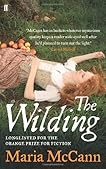
The Wilding by Maria McCann

The Wilding by Maria McCann
First published by Faber and Faber in 2010 (this edition by Faber and Faber in 2010)


Description (from Goodreads)
Jonathan Dymond, a 26-year old cider-maker in post-Civil War England, has enjoyed a quiet, harmonious existence until a letter arrives from his uncle with a request to speak with his father. When his father returns from the visit the next day, all he can say is that Jonathan's uncle has died. Then Jonathan finds a fragment of the letter, with talk of inheritance and vengeance...


My thoughts
The Wilding is a rather odd book. Set in England in the 17th century, a few years after the Civil War, the story begins by introducing us to Jonathan Dymond, a young cider maker. Right at the beginning of the novel, Jonathan and his family find out that Jonathan's uncle Robin is not well, so his father hastens to his bedside. But, because of the fact that he chooses to go on foot, by the time he reaches the nearby village (where Robin and his wife live), it is already too late. Soon after that, Jonathan finds a fragment of a letter in one of his father's pockets, which perplexes him and makes him want to pursue the matter and find out exactly what is going on. So, he uses the cider-making as an excuse to stay at his aunt's house and find out what exactly has been going on.


The story features the practice of cider making as a means to developing the story, seeing as Jonathan uses it as an excuse to get into his aunt's household. Which I thought was a rather original idea. I have never read anything about cider (I haven't even tasted cider, which is really quite irrelevant here) and I found the information about cider-making rather fascinating (in a learning stuff kind-of way).


The characters in this book are very well developed. We come to understand the motives behind most of the character's actions and to sympathise (or not) with them. Jonathan is a very well thought out character and serves as an excellent main character, through whom we see the whole story develop.


As for the story, it was truly excellent. There were many points in the novel that completely surprised me. I wasn't sure what I was expecting to happen while I was reading the chapters, but then, suddenly, came a revelation which I just did not expect. It's one of the things I really like in books; not being able to guess what is going to happen in the next few pages.


All in all, The Wilding is an excellent historical fiction book. It's not a very heavy read (not at all heavy, in my opinion) and is very well thought out, if a little ''creepy'' (for want of a better word) at times. A book that is definitely worth reading!


Rating: 8/10


Author:
Maria McCann is an English novelist. She was born in Liverpool and has been working as a lecturer in English at Strode College in Somerset for many years. The Wilding is her second novel, the first being As Meat Loves Salt, which is set during the English Civil War.


Read for the: 100 Books In A Year Challenge 2011

Monday, 1 August 2011

UK & EU Summer Hop


The UK & EU Summer Hop is finally here!! This giveaway hop works in the same way as all the other hops, but it's only open to people who live in the UK or Europe! There are many stops in this giveaway, giving away books in a large variety of different genres! Hopefully, there will be something there for everyone!

Here, I will be giving away books that belong to the genre of historical fiction. I know it's not everyone's favourite, but I love reading books with historical elements to them, so there!

While you're here, you're welcome to enter my P.J. Hoover swag giveaway, to win a pack of trading cards for her book, Solstice. Just click HERE to find out more and enter!


Onto the more interesting stuff!

The two books I will be giving away are:


AND


Just fill in this simple, easy-peasy form to enter!


The Fine Print:
To enter, please fill out the simple form below.
Only 1 entry per person.
Open to people who live in the UK or Europe!
You do not have to be a follower to enter the giveaway, but please have a look around and follow if you like what you see!
Giveaway ends on the 8th of August (but will be sent out on the 17th because that's when I get back!).


I am the 20th stop on this summer hop, with Lesley from My Keeper Shelf before me (giving away fae books) and Kara from Nocturnal Book Reviews after me (giving away fantasy/YA books)

You can find the other giveaway hosts from the linky here:


Monday, 4 July 2011

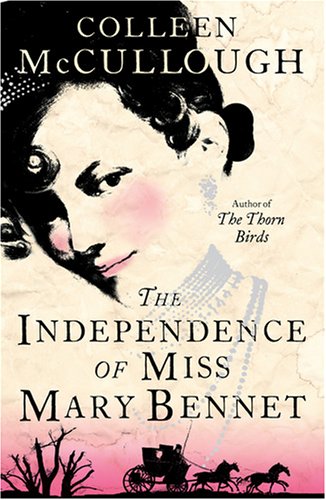
The Independence of Miss Mary Bennet by Colleen McCullough

The Independence of Miss Mary Bennet by Colleen McCullough
First published by HarperCollins in 2008 (this edition by HarperCollins in 2009)


Description (from Goodreads):
Twenty years after Pride and Prejudice closes, the Bennet sisters have another remarkable story to tell.

Mary Bennet, of the atrocious voice and staid bent of mind, has been weighed down with family obligations. Her sisters have made lives of their own: Jane is happily married, Elizabeth finds being a Darcy brings unwelcome social pre-eminence, Lydia's still entranced by soldiers, and Kitty's a star of London's fashionable salons. But Mary has had to wait for her moment to claim her liberty.

Once she is free, Mary resolves to publish a book about the plight of England's poor. Plunging from one pedicament to another, she embarks upon a mission of investigation that eventually leads her into mortal danger. But having tasted independence, Mary resolves to keep it - and she will let nobody, whether family, suitor or enemy, take it away.

Warm, witty, tragic and eminently satisfying, The Independence of Mary Bennet is a novel for every woman who has yearned to make her mark upon the world, from a master story teller. 


My thoughts:
The Independence of Miss Mary Bennet - as is obvious from the title - tells the story of the sister who is most reserved in the story of Pride and Prejudice. In this book, set 20 years after the events in P&P, we see a completely different story, where everything seems to be falling apart: Lydia has become a drunk and has been subjected to years of Wickham selling out her body for money; Lizzie is in a cold and distant marriage, as Fitz (that's Darcy) has reverted back to his cold and superior ways; Jane is tired out from having to endure one pregnancy after the other; Mary is stuck living with her mother in some corner of the country, where Darcy has hidden her away so as not to cause any embarrassment. On the other hand, Kitty seems to have made quite a good catch, by marrying a gentleman.


But then, Mrs Bennet dies, leaving Mary a free person. It is assumed that she will either stay with Jane or Lizzie (whose houses are a few miles apart), but Mary takes them all by surprise and decides to make her own way in the world, resolving to publish a book about the poor people of England. Somehow, though, she doesn't manage to get very far in her travels and lands into a bit of a predicament.


Though I really hate the cover of this book, it was the title that drew me to buy and read it. I really loved Pride and Prejudice and Mary was one of the most inconspicuous characters in it, so I was very interested to see what the author came up with to present as her story. At first, I absolutely hated the book. The only reason for that - and I know it's rather shallow - was the fact that Lizzie and Mr. Darcy (Fitz as he is known throughout the book) have not had a happy marriage, despite their lovely courtship in P&P. Talk about disappointing. But as the book progressed it became more interesting. It was obvious that the author made all the circumstances of the other Bennet sisters off-putting, so as for Mary to have an argument against marriage. Mary sets off on her grand journey, despite all warnings against it, and manages to end up having quite an adventure.


Mary's character is portrayed in a lovely way. It shows that she's not the same person she was 20 years ago; that she has grown to realise a bit more about the world. She is a wonderful, compassionate woman, who revels at being free (after nearly 20 years of being confined to care for her mother), and is smart and knowledgeable to boot.


I liked the fact that new characters entered the scene. It wasn't all about the characters we have already met and loved in Pride and Prejudice. My favourite would definitely have to be Charlie, Lizzie and Fitz's son.


Though I did enjoy this book, I can't say that it was one that I just have to keep on my shelves forever. Nearing the end, some of the things happening seemed to be dealt with in a very quick manner, to the point of me actually thinking that it was a rather quick change of heart.


Rating: 6/10


Author:
Colleen McCullough is an Australian author. She intended to study medicine at university, but a severe reaction of her skin to surgical soap led her to abandon her dream of becoming a medical doctor. Instead, she switched to neuroscience and has worked in many hospitals in Australia and England, before getting a teaching job at the Yale Medical School. She currently lives in Sydney.
Her other books include:


You can find out more about Colleen McCullough and her books HERE.

Read for the: 100 Books In A Year Challenge 2011

Sunday, 3 July 2011

Beyond The Bougainvillea by Dolores Durando

Beyond The Bougainvillea by Dolores Durando
First published by Bell Bridge Books in 2011 (this edition was received for free from the publishers via Netgalley for review)


Description (from Goodreads):
She found her place in a turbulent era of deep passions, heartbreaking sacrifices, and grand dreams.
When scholarly, smart Mary Margaret is sixteen, her father marries her off to a drunken neighbor in return for a tract of land. The year is 1924, and Mary Margaret's motherless childhood has already been hard as a farm girl on the desolate prairies of North Dakota. Abused and helpless, the new Mrs. "Marge" Garrity seems destined for a tragic fate.
But Marge is determined to make her life count, no matter what. Her escape from her brutal marriage takes her to California, where she struggles to survive the Great Depression and soon answers the lure of the state's untamed northern half. There, embraced by the rough-and-ready people who built the great Ruck-a-chucky Dam on the American River, she begins to find her true mission in life and the possibility for love and happiness with an Army Corp engineer of Cherokee Indian descent.
This vivid saga of one woman's life in the early decades of a turbulent century is told from the heart of a true storyteller in the grand tradition of women's sagas.

My thoughts:
Beyond The Bougainvillea is the story of Mary Margaret, known throughout the book as Marge, as she tries to deal with all the hardships life seems to throw her way. The book starts off during the early years of Marge's life, when she is living with her father in North Dakota, where - essentially - she is a personal slave of her father's. When she is sixteen, her father marries her off to a complete idiot of a man, who is way to old for Marge and treats her just like her father does. As a result of various circumstances and occurrences, as well as from the help of the people she is closest to, she ends up in California. From then on, Marge takes her life in her own hands.

When I finished this book, I was a little awestruck and not necessarily in a good way. While reading the book, you meet hardship upon hardship upon hardship, until you actually reach the point of wondering, 'What worse thing could happen?'. And then, surprise, surprise, it does happen... It's all tragedy: friendships gone bad, loves gone awry, fathers behaving like complete and utter idiots (though maybe that's too mild a word). Interspersed between all the bad happenings, there are also a few happy and positive moments, but they don't last long at all.

One thing I really did not like about this book was the fact that the author seemed to jump years ahead in just one sentence. By that, I mean that she would start of a chapter at 'Time X' and then, nearly half-way through it, we would find ourselves fast-forwarded to 'Time X+5'. She devoted chapters and chapters to all the things that went wrong and then, couldn't devote a few paragraphs about the years in between. I'm not sure I am making much sense, but if you read the book, you will see what I mean.

The book's redeeming quality would have to be Marge. She is such a strong character. At times, she came across as a bit of a bossy-boots and a know-it-all, and it seemed to me as if she was a bit of a meddler, too. I honestly have no idea how she kept on wanting to live with all the things that happen around her.

So, I'm not really sure what to make of Beyond The Bougainvillea, as you can probably tell. The only thing that I am sure about is that I didn't enjoy it as much as I thought I would.

Rating: 5/10 (I'm leaving it completely in your hands...)

Author:
Dolores Durando is the 90-year-old author of Beyond The Bougainvillea, which is also her debut novel. She grew up in North Dakota, though she didn't have the rough life Marge experiences in her novel. She's seen everything happen firsthand, so she knows what she's talking about when she describes the isolated and rough conditions in Dakota during the early 1900's.

Read for the: 100 Books In A Year 2011 Challenge

Thursday, 23 June 2011

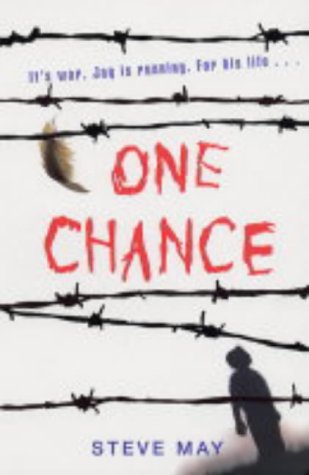
One Chance by Steve May

One Chance by Steve May
First published by Egmont in 2004 (this edition by Egmont in 2004)


Description (from Goodreads):
Jaq, is running scared. This is France, wartime, 1940. Dodging soldiers and enemy tanks, hunted by the villagers for thieving, Jaq has nowhere to hide, nowhere to shelter, no one to turn to. And then he meets Lise...Told in the manner of a traditional adventure story, Steve May's writing stands out for its pace and dynamism, and offers a wonderfully fresh and modern account of wartime France.


My thoughts:
I only picked up this book because, after 1984, I was in the mood for something much lighter and much easier to read. One Chance is a children's book, which we have had for quite a few years, but which I had not read when I was younger. 


What I got was not what I expected. This is a book that is definitely targeted to a much, much younger audience than my 21-year-old self. The good thing about this book is that, instead of focusing on the war itself, it focused on the relationships between the members of two families, when Jaq, a 15 year old thief, appears and steals a chicken from one of them. All of these events happen having the war as a background and it only seems more real as the reader reaches the end of the book. It doesn't lessen the effect of the war, as it is mentioned throughout the book; it's just that it is more real near the end. The characters are ok. I didn't feel as if I could relate to any one of them, except maybe Yvette, Lise's mother. She was a wonderful maternal figure, not afraid to stand up for her beliefs.


The one thing I really did not like about this book was the writing. I hadn't liked it even after a few pages, but it got more tiring as the book progressed. As a result, it took me 2 days to finish a 250-pages-long children's book with a relatively large font. To give you an example, this is what you can find on the back cover of the book (but it is in the same tone as most of the book):


This is France, 1940. War is approaching and Jaq is running scared. Branded as a thief. Hunted. He has nowhere to hide. No one to turn to. And then he meets Lise.

Most of the time, it felt as if I was reading a telegram or something of the sort. Though I did not enjoy it very much, I am pretty positive that a younger child would probably enjoy the book. (It is the intended audience, after all!)

Rating: 4/10

Author:
Steve May is a teacher, poet and radio dramatist, among other things. His novel, One Chance, has been described as a classic wartime adventure story, fit to rival the storytelling of Morpurgo.

Read for the: 100 Books In A Year Challenge 2011, British Books Challenge 2011

Sunday, 27 March 2011

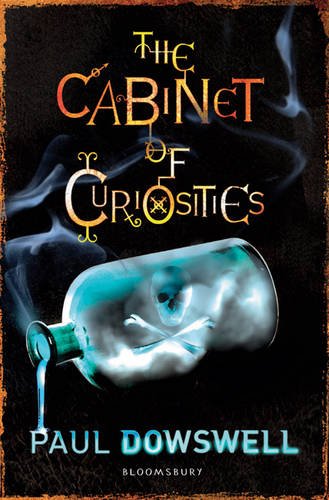
The Cabinet of Curiosities

I received this book from Bloomsbury, through Becky of The Bookette, who managed to get Bloomsbury Publishing to sponsor the month of February for her British Book Challenge 2011. I received 6 books in the parcel and I am now going to review the first one I read out of the bunch!


The Cabinet of Curiosities by Paul Dowswell
First published by Bloomsbury in 2010 (this edition by Bloomsbury in 2011)


Description: (from Goodreads.com)
When Lukas Declercq is orphaned, his uncle summons him to Prague, a refuge for Europe’s greatest alchemists and natural philosophers. Uncle Anselmus is court physician to Rudolph II, the reclusive and unstable emperor. He is also curator of Rudolph’s bizarre Cabinet of Curiosities, a series of vast rooms stuffed with wonders and scientific marvels. As Rudolph retreats further into his fantasy world, the threat of rebellion hangs in the air. Dorantes, a diplomat from Spain, comes with his daughter, Celestina, on a mission from Philip II to persuade Rudolph to give up his heretical ways. Soon Lukas discovers the terrible truth behind Dorantes’s mission. But sinister forces have plans for Lukas too, and before he can thwart the plot against the emperor, Lukas must gamble on Celestina’s loyalty in order to save his own life.


Opinions:
This book was a rather quick and enjoyable read. It tells the story of a boy, Lukas, who is on his way to Prague to join his uncle and train as a physician. He faces many adventures, which begin while he is still on his journey to Prague, and continue throughout the whole time he is living there with his uncle.


As I said before, it was quite a quick book to read. It was quite enjoyable, too, and I did like the book. However, I didn't love it. I think the characters were well-thought out and the story was quite interesting, especially with the inclusion of the Cabinet of Curiosities. From the description inside the book, there seemed to be everything in that Cabinet! Which was more of a series-of-rooms than an actual cabinet. You might wonder how a Cabinet can play such an important role, so as to have the entire book named for it, but it does. Most of the things that happen in the book, either directly or indirectly link back to the Cabinet. (I think I've said the word cabinet one too many times...)


Other than the Cabinet, the book also focused on alchemy (seeing as most physicians at that time were actually alchemists who brewed different concoctions and investigated the properties of ingredients, so as to use them as a way of curing ailments) and the Inquisition. I don't really enjoy books that feature the Spanish Inquisition in them, as there is usually too much violence and too many notions that I find completely and utterly stupid (but which were important to them) but this one was not that bad. Can't really say why, but it wasn't.


There was one character in the book that I did not like: the emperor, Rudolph. From what I saw (after I looked into it a little), Mr. Dowswell has done his research and has pictured him correctly in the book. So my criticism is not for the way the character was developed in the book, but the character in general. He seemed like such a pathetic man. Afraid of everything and desperately seeking to find out the truth about the world. Which is not a condemnable fact in itself (does that sound right?), but it made him the weakest, most pitiable character in the book. It probably came with all the power of the position. Made him feel more vulnerable. I don't really know. Though, having said that, one thing I liked about him was that when he had made a decision, he kept it. Especially ones which were directly connected to the Church.


I didn't mind the author's style of writing. It was by no means fast paced, but it wasn't slow either. A good pace, which is definitely more suited to younger readers. I think I would have enjoyed it a little more, had I read this book when I was younger (which is impossible, but I'm just saying...)


Rating: 6/10


Author:
Paul Dowswell is a British author, who has written both fiction and non-fiction books. He worked in publishing for many years and has written a great number of books that have been published by an array of publishers in the UK. His books have also been published outside the UK. His books are mainly historical fiction (he studied History at university) and information books.


Some of his other books include:


Powder Monkey (The Sam Witchall series) (Amazon.co.uk | Goodreads)

Auslander (Amazon.co.uk | Goodreads)

Sektion 20 (Amazon.co.uk  | Goodreads)
Sektion 20 is his latest book.
You can find out more about the author here:

Counts as Book #21 in my 100 Books In A Year Challenge and as Book #10 in my British Books Challenge 2011!

(All pictures are from Goodreads)

Reminder: I received this book for free from Bloomsbury, as part of a prize pack. It has not influenced my review in any way.

Tuesday, 15 March 2011

Burning Bright

This is my second Tracy Chevalier book. I hadn't actually planned on getting it. It just caught my eye in the bookshop and I bought it, just before Christmas! Now, on to the review!


Burning Bright by Tracy Chevalier
First published by HarperCollins in 2007 (this edition by Harper in 2008)


Description: (from back cover)
London, 1972. The Kellaways move from rural Dorset to the tumult of a cramped, unforgiving city. They are leaving behind a terrible loss, a blow that only a completely new life may soften.
Against the backdrop of a city jittery over the increasingly bloody French Revolution, a surprising bond forms between Jem, the youngest Kellaway boy, and streetwise Londoner Maggie Butterfield. Their friendship takes a dramatic turn when they become entangled in the life of their neighbour, the printer, poet and radical, William Blake. He is a guiding spirit as Jem and Maggie navigate the unpredictable, exhilarating passage from innocence to experience. Their journey influences one of Blake's most entrancing works.


Opinions:
This was such an easy book to get into! Even from the very beginning! I didn't have enough time at first, but when I found some on Saturday, I practically devoured the book! I stayed up until very late, because I just had to finish it! (That actually happens far too many times, to be honest). Now, on to the actual review.

The book tells the story of a family, the Kellaways, who leave their home in Dorset and come to live in London, to escape their memories. Upon arriving, they realise that is not so easy to do, but stay there anyway, with the father working for Mr Astley (of Astley's Circus - a famous London circus in the 1790s). Jem, the youngest child, meets Maggie, a Londoner who just happened to be there when the Kellaways were moving into their house. Together they embark on all sorts of adventures, many of them revolving around the well-known radical Mr William Blake.

I had actually only heard of William Blake, prior to reading this novel. I did recognise his name, but I did not know what he was known for. Turns out he was actually a very well known poet, as well as a printer.

The book is very well written and instantly drew me in. The characters are wonderfully constructed. The frightened Kellaways, who have left their home in Dorset and are now living in the big city; Maggie, a girl who wants to show she is tough-as-nails, but is really quite vulnerable; the Astleys, proprietors of the circus that seems to dominate everyone's lives; William Blake, who plays such an important role in the whole story. Everyone mentioned in this book, seems to play some important part in the story, every detail is important. The descriptions of the places and goings-on (going-on's ???) in the book are just wonderful! I think Chevalier has managed to describe the fun and the intrigue (both in front of and behind the scenes) of the circus.

As you have probably gathered by now, I enjoyed this book very much! I think Tracy Chevalier is getting to be one of my favourite authors. She has such a great style of writing. I would definitely recommend reading it!

Rating: 9/10


Author:
You can read more about the author in my post on Remarkable Creatures.
Clarification: Tracy Chevalier was born in America, but as she currently resides in England and her book was first published in the UK, I believe she qualifies for the BBC 2011. If not, please let me know!

Counts as Book #17 in my 100 Books In A Year Challenge and as Book #7 in my British Books Challenge 2011! 

Monday, 28 February 2011

The Winter Ghosts

I have read Kate Mosse's other two book, ''Labyrinth'' and ''Sepulchre'', so I just had to try this one too, to see what it would be like.

The Winter Ghosts by Kate Mosse
First published by Orion in 2009 (this edition by Orion Books Ltd. in 2010)


Description: (from back cover)
'Do you believe in ghosts?'
It's 1928. Freddie Watson is still grieving for his brother, lost in the Great War. Driving through the foothills of the French Pyrenees, his car spins off the road in a snowstorm. Freddie takes refuge in an isolated village and there meets a beautiful, captivating woman. They spend the night talking of love and loss and war. But by daybreak, Fabrissa has vanished and Freddie realises he holds the key to an ancient mystery that leads him deep into the mountains, to a cave that has concealed an appalling secret for 700 years . . .

Opinions:
''The Winter Ghosts'' is a very enjoyable book. As I mentioned before, I have already read Kate Mosse's other two books, which I thoroughly enjoyed! Sepulchre more so than Labyrinth, but both very good books regardless of my slight preference.

I was quite surprised when I first opened the book to find that - other than the fact that it is quite a small book - it has very large print! Which essentially means that the book is even shorter than I had expected. It was very easy to read, without being boring or anything like that. About half way through the book, you will probably get the feeling that you know what is going to happen in the end. Well, you might be wrong, you might be right...

I have to say here that I could not entirely sympathise with the main character, Freddie. He seemed to me like a very weak person, from the way he did not cope with his brother's death. But I suppose that of he hadn't been as he was pictured in the book, there would not have been much point in writing the book in the first place.

I have to admit that there was one thing that irritated me: the fact that once more, the book is set in the Carcassone area in France. As were the other two books I have mentioned. I know that the author lives both in England and in Carcassone, but it's one novel too many, in my opinion. I'm ok with the other two books as they are part of a trilogy (the Languedoc trilogy), but it wasn't necessary to have this one set there too... Having said that, I don't mean she should never again set a novel in Carcassone, but she should probably set one of her next ones someplace else, just for a change.

Just to finish on a nice note: This book is probably an ideal book to read when it's bitterly cold outside and you are curled up on your settee with a nice cup of hot, strong tea. It says on the back cover that you should 'stop the clock and read it in one sitting', which I am sure would be just perfect! (If only it were that cold over here... and I had a fireplace...)

Rating: 7/10

Author:
Kate Mosse is a British author and broadcaster. She was born in West Sussex and was educated at Oxford University. She currently lives in both West Sussex and Carcassone with her family. She is the co-founder and honorary director of the Orange Prize for Fiction. Other than ''Labyrinth'' and ''Sepulchre'', Kate Mosse has also written ''Eskimo Kissing'' and ''Cricifix Lane''. ''The Winter Ghosts'' is her latest novel. The last book in the Languedoc trilogy, ''Citadel'' is due out sometime in 2011.
Here are some selected covers:

Here are some links if you would like to find out more!

Counts as Book #11 in my 100 Books In A Year Challenge and as Book #6 in my British Books Challenge 2011!

Tuesday, 1 February 2011

Nothanger Abbey

Book title: Northanger Abbey
Author: Jane Austen
Publisher: Penguin
First published: 1818
No of pages: 254

Description: (from the back cover) During an eventful season at Bath, young, naive Catherine Moralnd experiences fashionable society for the first time. She is delighted with her new acquaitances: flirtatious Isabella, who introduces Catherine to the joys of Gothic romances, and sophisticated Henry and Eleanor Tilney, who invite her to their father's house, Northanger Abbey. There, influenced by novels of horror and intrigue, Catherine comes to imagine terrible crimes committed by General Tilney, risking the loss of Henry's affection, and has to learn the differences between fiction and reality, false friends and true. With its broad comedy and irrepressible heroine, Northanger Abbey is the most youthful and optimistic of Jane Austen's works.

Review: I've been thinking for quite a while. Ever since I started this book, to be precise... How on earth am I going to review one of the Classics??? I mean, they are the classics. Not everyone might know of this particular book, but they definitely know Jane Austen (even if it's just because of the BBC series of Pride and Prejudice - with dishy Colin Firth - or the Pride and Prejudice film - with Keira Knightley). But I'm going to give it a try, nonetheless. So here goes...

If I am going to do this, I'm going to be honest about it. I have always found books that were written in the 1800's to be a bit tedious in their way of writing. But in my opinion, when reading a book like this one you should try to disregard the style of writing and try to focus as much as possible on the story.

So, with this little tip given, I have to say that I completely agree with this phrase from the description:
''With its broad comedy and irrepressible heroine, Northanger Abbey is the most youthful and optimistic of Jane Austen's works.''
I know I have only read ''Pride and Prejudice'', but I have read the plots of all of Jane Austen's works and it probably is her most optimistic book. As said in the description, the story revolves around Catherine Morland, a young girl who has never been out in society before, due to her family's lack of means to do so. So, when a slightly richer couple offers to take Catherine to Bath with them, Catherine jumps at the chance. There, she mingles with fashionable society and makes new friends in the faces of Isabella, Eleanor and Henry. After some time in Bath, Catherine is invited over to Northanger Abbey by Eleanor and Henry. She, of course, goes and there experiences new things she never has before. I can't say any more than that without giving the book away, for those who would like to read it!

All in all, I enjoyed the book, even though it took me ages to finish. I started it during the first days of January and managed to finish it on the 31st of January (Yay me!!). It's not a book you can devour... It takes its time to be read, mainly due to the fact that its language can get a little tiring. But, I believe it's definitely worth reading and I think you will probably enjoy it when you do!

Rating: 7/10 

Author: And now for author info. Jane Austen was born in 1775 in Steventon, Hampshire to a large family of substantial gentry. Not much is known about her life and the information that is available has been surmised by some of Austen's correspondence mainly with her sister, Cassandra. Jane Austen never married, even though it is probable she may have loved Tom Lefroy, the son of some neighbours who spent a brief period in Hampshire when Jane was 20. Their families separated them when they found out they spent an inordinate amount of time together, and they probably never saw each other again. She died in 1817, possibly from bovine tuberculosis (which is caused from drinking unpasteurised milk).
She wrote many well known books, with her most well known ones being ''Pride and Prejudice'' and ''Sense and Sensibility''. Other than those two, her other works include ''Mansfield Park'', ''Emma'' and ''Persuasion''. ''Persuasion'' and ''Northanger Abbey'' were actually first published in the year after her death (1818).
As always, websites about the author:
Jane Austen (not so sure if this works though!)

Here are some trailers for films and series that have been made and are based on her books:


There is also the BBC series for which I could not find a good quality trailer, but I believe you can watch it on YouTube if you look for it.
There is one last film to talk about, which was made in 2007, called ''Becoming Jane''. It tells the story of Jane Austen (portrayed by Anne Hathaway) and Tom Lefroy (portrayed by James McAvoy). Enjoy the trailer!


Counts as Book #4 in my 100 Books In A Year! And as Book #2 in my British Books Challenge 2011!

Bye!

Monday, 24 January 2011

Remarkable Creatures


Today I am going to write about another book I read quite recently, while on holiday in England! The book is ''Remarkable Creatures'' by Tracy Chevalier. For those to whom the name of the author might mean something, she is the author of the very well-known book ''The Girl With The Pearl Earring'', which has been made into a film starring Scarlett Johansson and Colin Firth (yummy!!!). Anyway, this post is about ''Remarkable Creatures''. So, let's get on with it!


As someone might realise just by looking at the cover of the book, the story is about fossils. More specifically, it is the story of two women and their love of fossils, which led them to many great discoveries. Two women who are actual historical characters (even though I have to admit I had never heard of them before...). The book tells the story of two women pioneers in the field of fossils: Elizabeth Philpot and Mary Anning.
Set in Lyme Regis, the book tells the story of Mary Anning, who was struck by lightning when she was only a baby and miraculously survived. Mary Anning is an actual physical person, not a fictional character. She used to collect fossils (or ''curies'' as she called them) with her father from a very young age, which they used to sell to people who came to visit Lyme Regis. The used the curies as a way of providing an extra income for their family, as many people would pay for a memento such as that.
The story follows Mary through the years, beggining with her childhood and first meeting with Elizabeth Philpot and going through her big discoveries in the field of fossils, while, at the same time, describing her unique relationship with the other main character, Elizabeth.
I think that I have said more than enough about the book, now... Maybe even TOO much. I think you get the gist of it though!
So, now, on to my own comments about this book. As I mentioned in the introduction, I read this book in the summer after my Grandma recommended that I read it. I was a bit reluctant at first, because I had never read a story by Tracy Chevalier before (even though I had heard of her) and because of the fact that the story did not sound particularly interesting to me, after having read the back cover. But, nevertheless, I decided to read it and I have not regeretted my decision. It truly is a wonderful book! It is very well written and the story is not at all boring (as it turns out). She describes everything in great detail, which is very important, especially in the fossils' department. All in all, I would give this book a rating of 8/10.
Tracy Chevalier is an American novelist, who lives in London. She has a B.A. in English Language from Oberlin College. In 1993 - after many years of working as an editor - she quit her job in order to participate in an M.A. in creative writing, at the University of East Anglia. The first book she published was ''The Virgin Blue'' in 1997, but she rose to fame with her second book, ''The Girl With The Pearl Earring'', which was published in 1999. Her other books include ''The Girl and The Unicorn'' and ''Falling Angels''. ''Remarkable Creatures'' is her latest book.

And, as always, some links for anybody who is interested!

Goodbye for now! Until next time!

Sunday, 18 July 2010

The Aviary Gate

Hi!!! I'm back again!! I'm sorry about the big gap between my previous two posts... Again...
Today, I decided to write about another book I read fairly recently. ''The Aviary Gate'' by Katie Hickman. I read it around Easter, if I remember rightly... Which I think I do..! I had actually never heard of the author, but I liked the look of the cover and the info on the back-page made it seem interesting, so I decided to buy it!


So, let's start with the main theme of the book. The story begins when Elizabeth Stavely finds a fragment of a piece of parchment dated 400 years ago, while searching in the Bodleian Library for something on which to base her DPhil thesis. She believes that the parchment is about Celia Lamprey, the beloved of the legendary English merchant Paul Pindar. So, she decides to base her thesis on whatever information she can acquire about Paul and Celia. During her search for this information, she ends up in Constantinople, following a lead that wants Celia Lamprey to have been captured and enclosed in the Sultan's harem, and not to have drowned in a shipwreck. There, not only does she find valuable information, but also makes some life-changing decisions.
The narrative is split into two parts, which are interwoven. Half of the book is set in present day Oxford and in present day Istanbul, and the other half of the book is set in Constantinople in 1599. The author tells the two parts of the story together, so we find out facts about Celia's life through Celia's narrative, while Elizabeth is searching for it in the present.
When I bought the book, I though it might be quite interesting as it is set in Constantinople (and you know what Constantinople, a.k.a. Istanbul, means to the Greeks...). I started reading it and at first I really enjoyed it! But as the book went on, I started to find it a bit tiring, and the parts that were really tiring were the ones where Celia Lamprey's life was described. I think that the author probably wanted to fit in too much information, so it kind of went on and on and on, thus tiring the reader (or, at least, me...). But I decided to finish the book, as I was already quite far along, and in the end, I was quite happy that I had finished it. All in all, though, if a were to give it a rating, it would probably be 6/10. I mean, it was a nice book and it was interesting, but as it tired me about half way through (when others didn't), I think it is only fair that it gets a lower rating. Regardless of what I say, it is still my personal opinion, and if you find the story interesting, it is worth a try! You might not even find it tiring! I believe it is worth a try!
As always, I should give some information about the author. Katie Hickman was born into a diplomatic family, which resulted in her living quite a few years abroad. She read English at Oxford and, at the same time, she started travelling on her own and writing books about her travels. These books include ''Dreams of the Peaceful Dragon'', ''The Quetzal Summer'' and ''The Trip to the Light Fantastic'', later re-issued as ''Travels with a Circus''. After that, she turned to writing history books, including her famous bestsellers ''Daughters of Brittania: the Lives and Times of Diplomatic Wives'' and ''Courtesans''. Her next book was ''The Aviary Gate'', which I described above and which took 15 years of research to write. Her last book, to date, is ''The Pindar Diamnond'', which is set in Dalmatia and tells the story of Paul Pindar (from ''The Aviary Gate'') and his obsession with a certain diamond, as the title suggests. 


(Wow! This has to be the most information I have written about an author before... Probably because it was quite easy to find!)
Here are some links to sites that might be of interest to some!


I'll be back soon!!!

Sunday, 27 June 2010

The Island

Hello again from here! To tell you the truth, I do not know if my previous post was good, but never mind ...! Logically, they will get better as time goes by! Or at least I hope so... 
Today, I am going to write about my very favourite book, The Island. The author of this book is Victoria Hislop, a British journalist. The book is all about Spinalonga, an island in the gulf of Elounda in Crete. And you might say, so what??? The reason is that the island of Spinalonga is known is because it used to be a leper colony from 1903 until 1957. The author uses this fact on which to base her story. The idea for this book came to Ms Hislop after a holiday in Crete in 2001. During her stay in Crete, she stayed in Elounda and she found out about Spinalonga. Characteristically, she mentions that the tour guide said very little for Spinalonga. Specifically it said: ''abandoned leper colony at a short distance from the coast. Boats every half hour.''. The writer also mentions that the minute she set foot on Spinalonga, she decided that she wanted to write a novel about the island and it's role in society while it was still in use as a leper colony.


The book tells us the story of a girl, Alexis Fielding, a woman on the brink of a major decision, who decides to find out her family's past, which her mother refused to talk about. Knowing only that her mother grew up in Plaka, a small village in Crete, near Elound, she decides to travel to there to see what she can find out. Upon arriving there, she finds out about Spinalonga and meets a woman, Foteini, who was an old friend of her mother's, and who is the only one who can tell her the story of her family. A story that is closely linked with the Plaka and Spinalonga and which, in the end, has the ability to change the very future of the heroine.
I read this book two years ago, but I was reminded of it two weeks ago, when I visited Spinalonga. Which is a bit embarrassing really, as I go to Elounda almost every year and has been going for at least a decade! Nevertheless, I finally did it! I remember, however, that I had really enjoyed the book! I remember that my grandmother lent it to me, but it took me ages to get to the point of reading it, because I thought it would be a bit odd/weird... (It's not my fault that my grandmother usually reads very peculiar books!) But when I started reading it, I really could not put it down! I found the subject of the book to be interesting and it was very well-presented by the author. I learned many things about a subject on which I had heard only very little and only just know the basic facts that most people know. The score would give this book is 8/10, because I think it is really a book that is worth reading. I strongly believe that if someone decides to read this book, they will not regret it! And it's not only me speaking. My friend Linda absolutely loved it and so did my grandmother! 
A further incentive to read the book, at least for the Greeks, is the fact that Mega Channel has acquired the rights to make a weekly series based on the story. The series has already started filming in Elounda, Spinalonga, Agios Nikolaos (St. Nicholas) and Chania. It will star many well-known Greek actors.
And for those who have not seen Spinalonga, here are some pictures!

Spinalonga, as seen when approaching in the boat ...

The main gate through which the lepers reached the island (by boat from Plaka, located just opposite from Spinalonga) ...

And finally, a picture of Spinalonga from the air ...

As for the author, after '' The Island'', she has written another book called ''The Return''. This book takes place in the city of Grenada (Spain) and has some common elements with ''The Island'' (the heroine discovers the story of her family, this time without actually going to find out about it). Despite this basic similarity, this book is also very pleasant. But more about it in another post!
To conclude, here again are some links that are related to the book and the author.


Bye-bye for now!

Related Posts Plugin for WordPress, Blogger...